Analytics & CRM
How to create a UTM naming convention your team can use
Stop splitting campaign reports across inconsistent UTM tags. Use a clear naming template, example links and a GA4 checklist before every launch.
Vladlens Kecko · · 4 min read
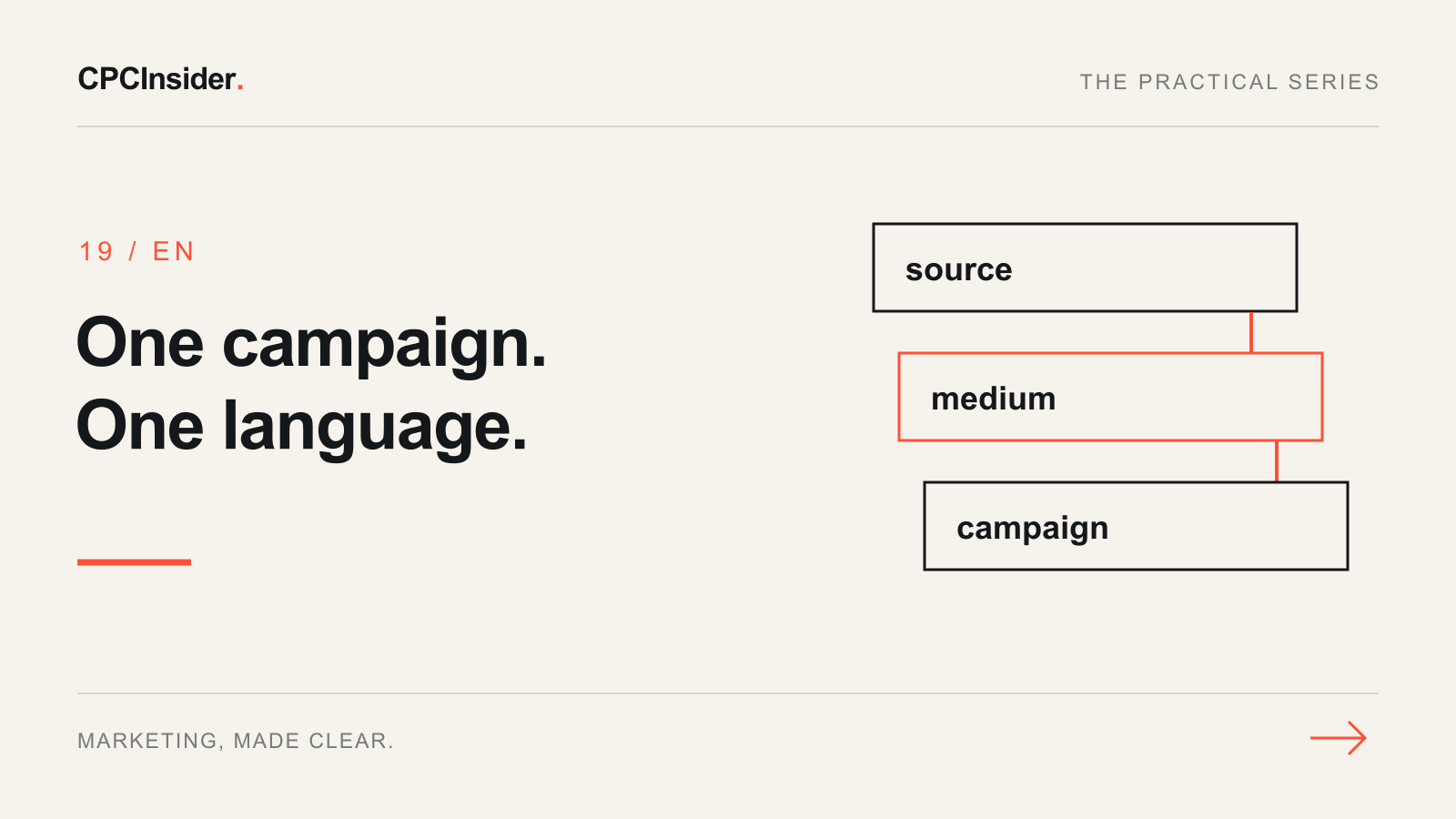
A UTM naming convention is a shared set of rules for labelling incoming campaign links. It prevents one team member using “facebook”, another “fb” and a third a campaign name that nobody can identify later.
Start with a short dictionary and a launch check. You do not need a new analytics platform to stop creating avoidable naming differences.
1. Agree what each parameter means
Google's GA4 campaign URL documentation explains the parameters and their case-sensitive values. These example rules are a team convention, not values required for every business.
| Parameter | Team rule | Illustrative value |
|---|---|---|
| utm_source | Stable sender or platform name | newsletter |
| utm_medium | Agreed channel medium | |
| utm_campaign | Readable initiative name | autumn_audit_lv |
| utm_id | Stable campaign identifier | audit_2026_09 |
| utm_content | Distinguish a creative or link position | footer_cta |
Use consistent lowercase labels and one separator. Keep a campaign ID stable when renaming creative. Choose source and medium values with the intended GA4 channel classification in mind; an arbitrary label can make a report harder to use.
2. Build a complete example link
An illustrative newsletter link is https://cpcinsider.com/?utm_source=newsletter&utm_medium=email&utm_campaign=autumn_audit_lv&utm_id=audit_2026_09&utm_content=footer_cta#audit. Its parameters describe the referring campaign, not the person clicking.
For a partner article, use the partner's agreed source name and an appropriate referral medium. For paid social, document the platform source, paid medium and creative identifier in the same register. Avoid putting employee initials, customer emails, phone numbers or other personal data into URLs.
Keep UTM parameters on incoming marketing links. Ordinary links between pages of your own site need a different approach to interaction measurement; do not label every internal button as a new acquisition campaign.
3. Keep Google Ads auto-tagging in context
Do not replace a working Google Ads auto-tagging setup with manual tags just to make the naming scheme uniform. Google explains how manual and automatic tagging affect traffic-source dimensions. Record which source of data each report uses and test how the real destination behaves.
Preserve relevant parameters through redirects and booking flows. A link that looks correct in your spreadsheet can still lose parameters before the landing page loads.
4. Use one register for everyone publishing links
Copy the table and add a row for each destination or creative. The empty placeholders are intended for your own values.
| Destination | Source / medium | Campaign / ID | Content | Owner | QA status |
|---|---|---|---|---|---|
| Your landing URL | Approved dictionary values | Name and stable ID | Creative or position | Person responsible | Not tested / passed / fix needed |
Ask the owner to check the final link from the actual email, ad or partner placement. Confirm that the page opens, the form works, parameters survive, and the expected source appears in processed acquisition reporting. Use a recorded test time and account for consent choices and processing delay.
5. Repair the process before cleaning historical reports
A public GA4 discussion describes exactly this fragmentation problem. Naming rules prevent new inconsistencies; they do not rewrite past collection automatically.
If you group old values in a reporting layer, document the mapping and retain the original data. Assign one person to approve new naming values. Review a sample of live links periodically instead of relying on a document nobody checks.
Is a naming convention enough to prove revenue attribution?
No. It helps identify campaigns, but a trustworthy revenue view also requires valid outcome events, an understood attribution model and a connection to orders or CRM records. Use the GA4 audit checklist to test that wider journey.
Make campaign reporting easier to trust
Request a free performance audit and mention campaign tagging. Our tracking, attribution and CRM service can help connect consistent source data with customer outcomes.
About the author
Continue reading
Google Ads conversion tracking for B2B: from click to revenue
Connect campaign identifiers, lead stages and sales outcomes so advertising decisions reflect qualified pipeline and closed revenue.
GA4 audit checklist: 18 checks before you trust your reports
A hands-on GA4 audit for website owners and marketing teams: verify what is collected, trace real customer actions and separate tracking faults from reporting differences.
Why do GA4 and Google Ads show different conversions?
GA4 and Google Ads disagree? Compare conversion actions, dates, attribution and duplicate tracking with a practical reconciliation checklist.