Strategy
Lead nurturing: build a follow-up plan around the buyer’s next question
Plan useful follow-up for interested prospects: buyer questions, useful resources, sales handoffs and stop rules, with a clearly fictional service example.
Vladlens Kecko · · 5 min read
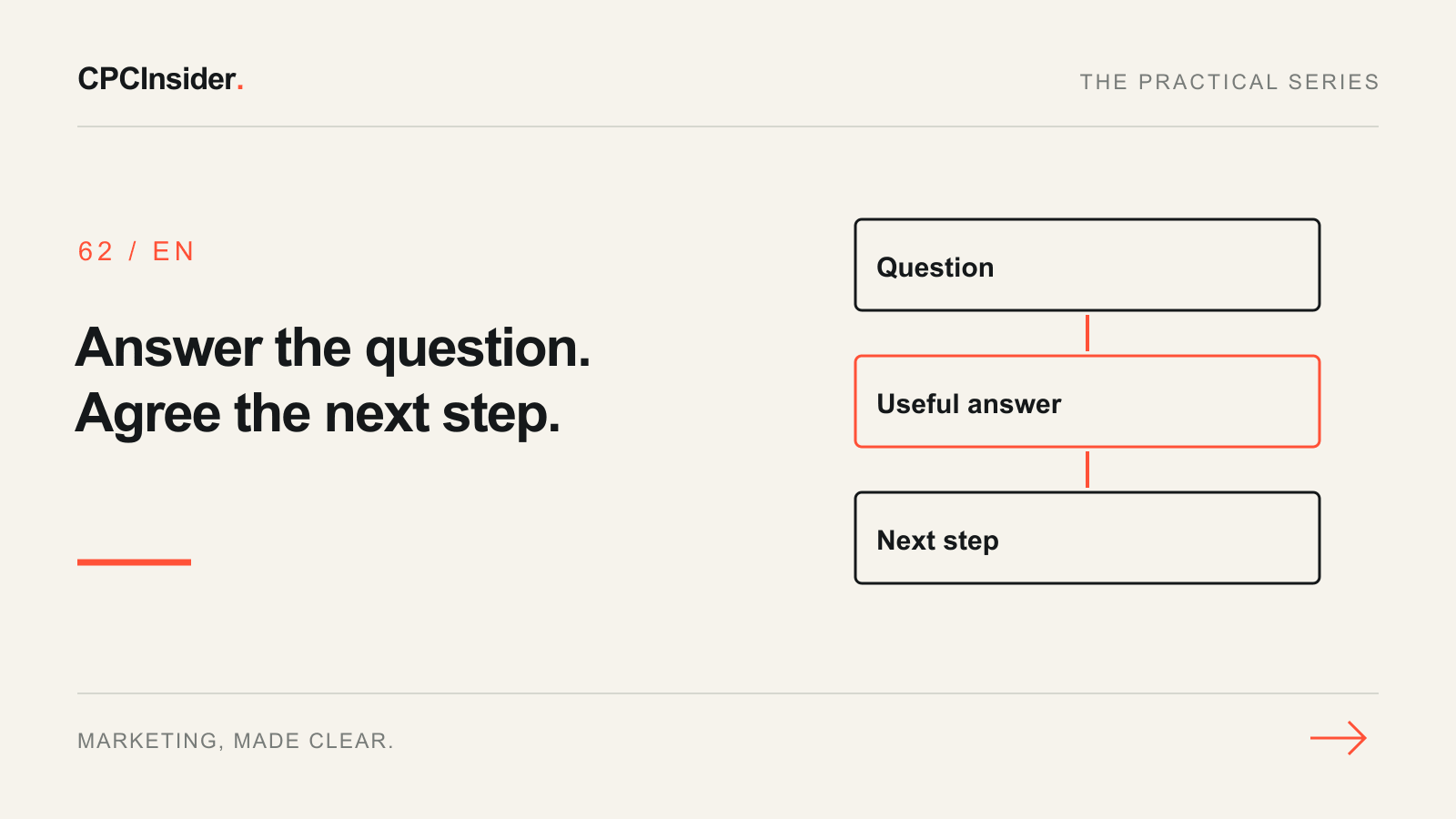
Lead nurturing helps an interested prospect make progress when they are not ready for a sales conversation. The practical output is a follow-up agreement: what information is useful, who provides it, what changes the next step and when communication stops.
IBM describes lead nurturing as relationship-building through relevant resources and content. The worksheet below is our suggested operating method, not an IBM campaign template or a promise of more sales. It follows lead scoring: scoring helps prioritise; nurturing decides how to help.
1. Separate a current request from early research
A person asking for a quotation needs an answer, not an automated education sequence. An interested researcher might need a scope checklist before a meeting makes sense. An existing customer with a problem belongs in support. Give each situation a separate route.
Choose one offer and one buyer situation. Ask sales which question repeatedly prevents a useful next step. Record the prospect’s stated question rather than guessing readiness from a page visit. An unknown budget is a question to clarify, not proof of poor fit.
2. Complete the follow-up worksheet
| Field | What to write |
|---|---|
| Entry condition | Why this person belongs in this follow-up group |
| Unanswered question | The specific decision they cannot yet make |
| Useful resource | A checklist, example or explanation that answers it |
| Next step | One optional action appropriate to that question |
| Owner and review | Who follows up and when to review the record |
| Exit condition | Request for sales help, changed need or request to stop |
Use channels the person has agreed to use and record their preferences. This is a planning guide, not a legal assessment of permission. Do not import unrelated contacts or treat a downloaded document as permission for unlimited communication. Check the applicable requirements before sending a campaign.
3. Work through a fictional maintenance-service example
This scenario, timing and content are invented. They are not a CPCInsider client result or a recommended universal frequency.
| Prospect’s question | Helpful response | What changes the route |
|---|---|---|
| What information do you need to estimate the work? | A short site-information checklist | They submit a current scoped request |
| How would a first visit work? | An example visit agenda with limitations | They ask to discuss availability |
| Can we revisit this next quarter? | Confirm their preferred review date | Their timing or permission changes |
The salesperson confirms the requested resource, records the next agreed step and checks whether a colleague is already handling the enquiry. A reply asking for a quotation exits the nurture queue immediately. A request to stop ends the planned contact. Silence is not evidence that more messages are wanted.
4. Make the handoff visible
Keep one record with owner, last useful interaction, open question, agreed next step and status. Do not run a personal sales sequence and a marketing sequence without coordinating them. Link the process to your CRM tracking agreement so “sent information”, “meeting held” and “won customer” remain different outcomes.
Before automation, manually test whether the right resource is selected, a reply reaches the owner and exit conditions prevent the next planned step. Use fictional test records. A workflow that cannot stop reliably is not ready to automate.
5. Review usefulness, not message volume
Count eligible prospects, useful replies, agreed next steps, sales-accepted conversations, stop requests and later outcomes. Keep the same cohort and allow for its normal sales cycle. Opens and clicks alone do not establish buying intent or incremental revenue.
The launch checklist is simple: one situation, one useful resource, one owner, a tested exit and a review date. Use the customer journey worksheet if the team cannot explain the question behind each step.
Make follow-up easier to run
Explore B2B lead-generation support or request a free 30-minute founder-led growth review. You receive a short written plan with three priorities, with no obligation to hire CPCInsider.
About the author
Free founder-led growth review
Know where to focus your next marketing investment.
In a focused 30-minute conversation, we review your advertising, website and sales follow-up together. Afterwards, you receive a short written action plan you can use with your own team or with ours.
Your biggest growth gaps
See where your ads, website or follow-up may be losing potential customers.
Your next 3 priorities
Get a ranked action list with the reason for each recommendation and what to check next.
A practical starting plan
Leave with clear next steps for your team, plus our recommendation if you want help implementing them.
Continue reading
Lead scoring: a practical worksheet for fit, intent and follow-up
Build a simple lead-scoring model without confusing activity with buying intent. Includes a fictional scoring example, review checklist and handoff rules.
Customer journey mapping: turn buying friction into one useful test
Map one customer, one buying situation and the evidence behind each step. Includes a B2B example, ownership checklist and a focused improvement test.
Google Ads conversion tracking for B2B: from click to revenue
Track Google Ads beyond form submissions. Preserve click sources in CRM, define qualified leads and connect campaign costs with won customers and revenue.