Strategy
Customer satisfaction survey: turn one recent experience into a practical fix
Design a short survey about one customer interaction, test the recipient rules and assign a follow-up owner. Includes a worksheet and reporting checks.
Vladlens Kecko · · 3 min read
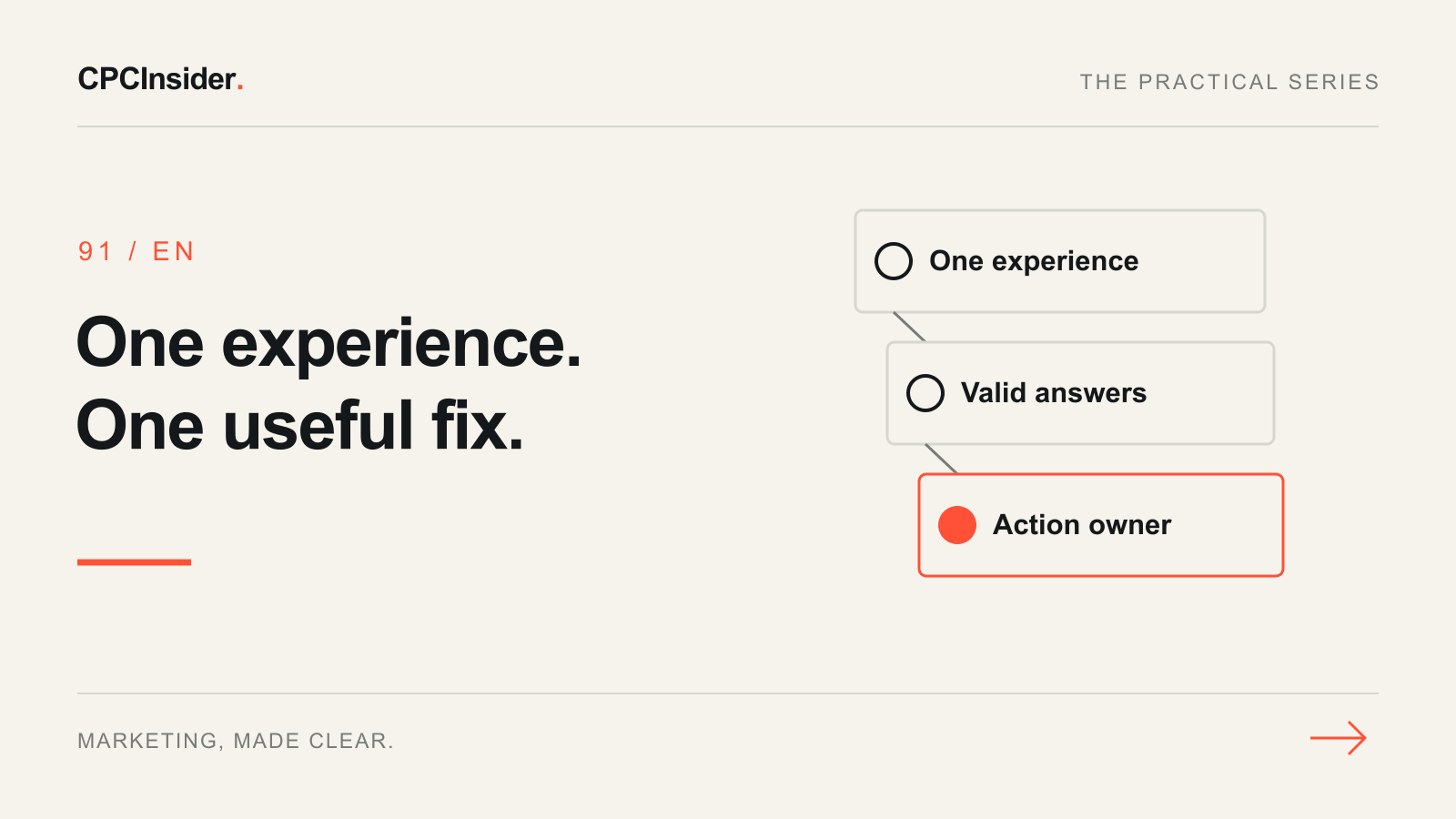
Customers say the service was disappointing, but the team cannot identify which part failed. Choose one completed interaction and write a question that explicitly names it. Open the recipient preview and confirm that the listed people actually experienced that interaction.
A customer satisfaction survey focuses on a product, service or experience. HubSpot’s CSAT documentation explains the interaction-focused format. For relationship-level recommendation feedback, use the separate NPS worksheet.
1. Fix the event and timing
Specify the interaction, completion event, recipient group and delay. Name what the team will do with an unhappy response. Choose a time when the customer has had a chance to experience the service.
Keep delivery, onboarding and support separate if you want to know which process needs work. If the recipient preview contains people who have not reached the event, repair the selection before sending. Include satisfied and dissatisfied eligible customers under the same rule.
2. Ask a question the customer can answer
Use plain language about the chosen experience. Label the response scale clearly and keep its direction consistent. Add one optional prompt asking what influenced the answer. Avoid combining price, speed and quality into a single question or suggesting that the customer should be pleased.
Test the complete survey on a phone using a record you control. Check the displayed language, submission, acknowledgement and owner notification. If the interface or wording changes by segment, note that when comparing results. A survey feature’s availability in a provider does not mean it is included in your current plan.
| Decision | Fill in before launch |
|---|---|
| Experience | Specific completed interaction |
| Audience | Inclusion, exclusions and repeat-survey rule |
| Timing | Event and delay |
| Response | Scale labels and optional explanation |
| Action | Follow-up owner and next review date |
3. Separate a score from a reason
If using a satisfied-response percentage, define the positive categories before reviewing results. Divide valid positive responses by all valid responses on that same scale, then multiply by 100. Publish the invitation count, response count, dates and scale with the result. Keep an incomplete response out of a scored-answer denominator and report how many were excluded.
Read the comments for concrete issues and contradictory accounts. People who answer can differ from those who remain silent. A small response group does not establish the whole customer base’s view, and a survey change can alter comparisons without any service improvement.
4. Close the feedback loop
Acknowledge a service issue through an appropriate private channel and give the operational owner a specific task. Record what changed and whether the customer’s issue was resolved. For a recurring pattern, check the underlying records before choosing a wider change. The customer journey map helps locate the responsible stage.
Keep the survey process distinct from review requests or marketing consent. Our Business Growth service links customer feedback to operating priorities. Request a free founder-led growth review for a 30-minute conversation and a short written plan with three priorities.
About the author
Free founder-led growth review
Know where to focus your next marketing investment.
In a focused 30-minute conversation, we review your advertising, website and sales follow-up together. Afterwards, you receive a short written action plan you can use with your own team or with ours.
Your biggest growth gaps
See where your ads, website or follow-up may be losing potential customers.
Your next 3 priorities
Get a ranked action list with the reason for each recommendation and what to check next.
A practical starting plan
Leave with clear next steps for your team, plus our recommendation if you want help implementing them.
Continue reading
Customer journey mapping: turn buying friction into one useful test
Map one customer, one buying situation and the evidence behind each step. Includes a B2B example, ownership checklist and a focused improvement test.
Net Promoter Score: calculate NPS and decide what to do with the feedback
Calculate NPS with the correct denominator, preserve the survey cohort and assign follow-up. Includes spreadsheet formulas and a reporting worksheet.
Customer retention rate: turn the number into one practical improvement
Use customer retention rate to identify where customers leave, investigate the reasons and plan one measurable improvement with clear ownership.